

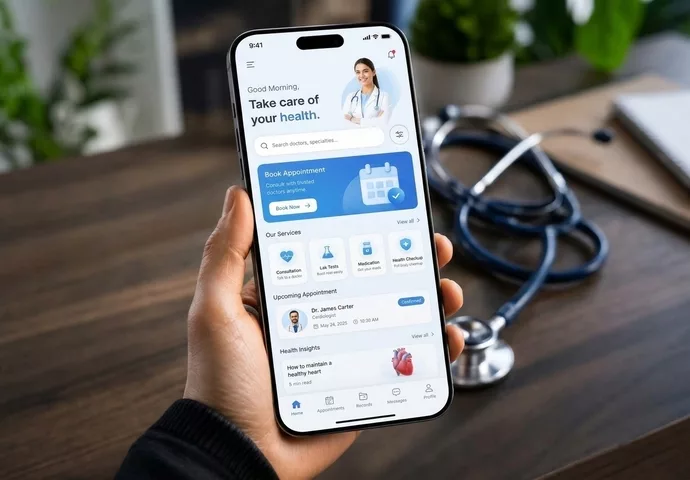
Opportunities in the Digital Transformation of Healthcare in Qatar
A Health System Being Rebuilt Around Software
In February 2025, Sidra Medicine and Rasmal Ventures signed a collaboration agreement at Web Summit Qatar to bring digital health startups into Qatar's healthcare system. In November 2025, The View Hospital launched InterSystems TrakCare, a sign of a move from a single hospital information system to a multi-vendor ecosystem. And in 2026, the Qatari government allocated QR 22 billion to healthcare in its annual budget — the largest allocation in the sector's history.
These aren't coincidences. They add up to a clear pattern: Qatar is rebuilding its healthcare system from the ground up with digital technology.
Qatar's digital health market reached $640 million in 2025 (Ken Research, August 2026) and is heading toward $2.33 billion by 2032, an annual growth rate of 20.3%. Add telemedicine services and the combined market is $1.2 billion in 2025, heading toward $3.82 billion by 2032 at 18% (Ken Research, 2026).
But large numbers raise a more important question for any technology company or health institution considering this market: what does HealthTech actually change, and what do you need to adopt it successfully in the Qatari environment?
1. The Full Picture — What's Been Built So Far
National Digital Infrastructure
Qatar isn't starting from zero. The national digital health system has been running for years on established infrastructure:
- CERNER (now Oracle Health): the core health information system for Hamad Medical Corporation, Qatar's largest government healthcare provider. It covers electronic records, medical orders, and patient management across the major hospitals.
- The MyHealth portal: the government platform that lets residents access their medical records, book appointments, and see lab results, approved by the Ministry of Public Health.
- TASMU Smart Qatar: includes an explicit health component — AI applications in diagnosis, telemedicine platforms, and chronic-patient monitoring systems — within the national smart-city framework. For TASMU's broader role, see: How Do Digital Integration Solutions Enable Smart Cities in Qatar?
- Scale AI in Qatar: in 2025–2026, Scale AI signed a five-year agreement to develop AI agents for Qatari healthcare call centers — an early model of agentic AI in the Gulf health sector.
The Numbers That Define the Landscape
- Smartphone penetration in Qatar: 79%, a fertile environment for digital health apps (IMARC, 2026)
- 3.68 million digital health interactions recorded in Qatar during 2025 (Ken Research)
- 29% of care providers used virtual care channels in 2025
- $174: average digital health spending per person in Qatar in 2025 (Ken Research)
- 17.48%: the historical growth rate of the market from 2020 to 2025 — a sector at real maturity, not early experimentation.

““The future of healthcare is not just about making medical services digital. It’s about creating connected, secure, and accessible experiences that bring patients, healthcare professionals, and medical systems closer together. Successful HealthTech solutions must be built around real healthcare needs and the realities of the local market.” — iSmart”
2. Four Areas Where HealthTech Is Taking Shape in Qatar
Area 1: Telemedicine — From Emergency Response to Permanent Infrastructure
Qatar's telemedicine market was $282.38 million in 2024 (IMARC, 2026) and is projected to reach $1.469 billion by 2033, growing at 17.93%. That jump isn't new adoption so much as the consolidation of something that began as a pandemic response and became lasting health behavior.
What shapes demand in Qatar specifically: a diverse population (more than 80% are expatriates) creates particular demand for remote consultation, especially among speakers of languages other than Arabic and English. There's also a concentration of busy professionals who prefer digital consultations over in-person appointments.
The untapped opportunity: private clinics and independent specialists still rely mainly on in-person appointments. Telemedicine platforms designed for private clinics — with smart booking, integrated payment, and a shared medical record — are a clear opportunity, and less crowded than the hospital segment.
Area 2: AI in Diagnosis and Administration
AI isn't entering healthcare in Qatar as a future technology. It's already an operational tool in several documented applications:
Medical imaging AI: models trained to analyze X-rays and MRI scans work alongside doctors to flag early patterns. In Qatar this eases pressure on radiologists — a direct efficiency gain in an expanding health system.
Chronic-condition management: diabetes and heart disease are among the most prevalent conditions in Qatar and the Gulf. Chronic-care apps that combine continuous monitoring, smart alerts, and doctor contact address a wide market and a real health need.
AI agents for patient service: the Scale AI agreement in Qatar is an early example of agentic AI handling patient inquiries, appointment scheduling, and follow-up after visits. For this trend in its wider context: 5 AI Trends Shaping the Future of Business.
Area 3: Health IoT and Remote Monitoring
15% of Qatar's remote monitoring services market came from mobile health apps, and 10% from connected health-measurement devices (ResearchAndMarkets, October 2025).
Demand for smart blood-pressure monitors, connected glucose monitors, and medical wearables is growing fast, driven in part by rising chronic-disease rates in the region.
The platforms that connect these devices to the doctor and produce analyzable data, not just raw numbers, are the highest-value component of this ecosystem.
Area 4: Digital Management of Hospitals and Clinics
This is the least glamorous area and the most complex — and the one with the highest operational value.
Appointment management, scheduling, billing, pharmacy inventory, and coordination between medical teams are all processes that still suffer from fragmentation and manual handling in many small and mid-sized private facilities in Qatar.
Specialist clinics and private medical complexes serving the expatriate community, who are the majority of the population, are a clear target market for integrated clinic-management systems localized for Qatar.
3. The Regulatory Framework in Qatar — What to Know Before You Build
Two main bodies oversee digital health in Qatar.
- The Ministry of Public Health (MOPH). Issues licensing rules for digital health platforms, telemedicine services, and patient-facing mobile health apps. Any app that provides a medical service or holds medical data needs review and approval from MOPH.
- Health data protection rules. Health data sits among the most sensitive categories of data from a regulatory standpoint. Requirements include full encryption at rest and in transit, strict access controls, and in some cases keeping data on servers inside Qatar.
- Integration with national infrastructure. Apps that aim to integrate with the MyHealth portal or the Hamad Medical system need additional technical and security approvals. That lengthens the timeline, but it raises the value of the product considerably.
4. The Real Challenges — What HealthTech Pitches Rarely Mention
Integration between systems
Qatar's healthcare environment runs on many systems: CERNER at Hamad, TrakCare at The View, independent systems in private hospitals. A health app that works in isolation from them creates a new data island — a burden, not a benefit. Integration through HL7/FHIR, the medical interoperability standard, is a technical requirement often neglected at the design stage.
Patient trust and privacy
Patients in the Gulf place particular value on the privacy of their medical data. An app that doesn't explain how data is used and protected meets resistance to adoption, however good its features.
Language diversity
A smartphone penetration of 79% means an audience with many languages. An app in Arabic and English only overlooks users who prefer Hindi, Urdu, or Filipino — large groups in Qatar's population.
Digital readiness of care providers
Not every doctor or clinic is equally ready, technically or culturally, to adopt digital tools at the same pace. Change management in a sector with a relatively conservative institutional culture needs an investment alongside the technology investment.
5. The Least-Invested Opportunities in the Qatari Market
The data and the current landscape point to four opportunities that are still less crowded than the noisier parts of the market:
- Specialized private clinics. Large hospitals attract most technology investment. But the network of specialized private clinics — dentists, dermatology clinics, physiotherapy centers — runs on aging or paper-based systems. A simple solution designed for that scale solves a real problem.
- Home healthcare. With some segments of the population aging and chronic-disease rates rising, home healthcare is growing. Apps that coordinate visits, track treatment, and connect patients with their care team at home are a clear gap in the market.
- Digital mental health. An emerging sector worldwide, and in the Gulf it calls for careful cultural design. Demand exists, but supply is still limited and mostly imported without real localization.
- B2B healthcare. Pharmacy inventory systems, medical-device tracking, and supplier contract management. The administrative side of hospitals allows commercial technology (ERP, workflow automation) to be applied in a specialized health context.
6. What You Need Before Building a HealthTech App in Qatar
Building a HealthTech app is more involved than building a typical commercial app, because users trust you with their most sensitive data.
- Licensing question first. Does the app provide medical consultation? Hold patient data? Monitor health indicators? Each answer determines the type of license needed from MOPH and affects the timeline.
- HL7/FHIR from day one. Building a health app on an API-first architecture that follows the HL7/FHIR interoperability standard opens the way to future integration with the national system, which raises the app's value and its ability to scale.
- Encryption and privacy built into the structure. As with PCI DSS in fintech, patient-data protection has to be built in from day one, not added as a later layer. For that principle in the fintech context: Fintech Apps in Qatar 2026
- Testing with real users before launch. A doctor who doesn't find the app intuitive won't use it. A patient who doesn't trust its security won't enter their data. Testing with real users on both sides before launch reduces the failure rate. For the full framework on building a mobile app: 6 Criteria to Build a Mobile App for Business And for common mistakes to check before choosing a development partner: 5 Mistakes to Avoid Before Signing a Software Development Contract.
Where iSmart Fits In
iSmart Trading & Technology develops HealthTech apps for the Qatari market, built on three principles:
- Regulatory groundwork first. We start by defining MOPH and data-protection requirements before any architectural decision, so the app reaches launch with its regulatory path already settled.
- Integration with the Qatari ecosystem. An API-first architecture following HL7/FHIR standards makes integration possible with the MyHealth portal and existing health systems, which raises the app's value and reduces friction in adoption.
- Design for Qatar's diverse audience. An interface that supports Arabic and English natively, with attention to the cultural and linguistic diversity of the Qatari market.
Talk to the iSmart team to assess your project and define the development and regulatory requirements before you commit.
Conclusion — A Sector in Transition, and the Ones Who Understand It Today Will Lead It Tomorrow
Qatar's digital health market won't reach $2.33 billion by 2032 because the government wants it to. It will get there because patients, doctors, and health institutions now expect an integrated digital service as the standard, not an add-on.
The opportunity is real and the timing is right. But success in HealthTech in Qatar isn't built by copying global models. It's built on a deep understanding of the local market: the diverse population, the regulatory framework, and the existing care ecosystem the app has to integrate with rather than ignore.
Related Tags
Social Share
{{ replyingTo ? replyingToText + ' ' + replyingTo.name : leaveCommentText }}
Search News
Popular category
Follow Us

Media Center
Subscribe for industry insights
All rights for iSmart company
{{page.totalItems}} Comments